
Table of Contents
- Understanding Graphene and Graphene Oxide
1.1 Understanding Graphene
1.2 Understanding Graphene Oxide - Key Differences Between Graphene And Graphene Oxide
- Why These Differences Matter
- Benefits
4.1 Benefits Of Graphene
4.2 Benefits Of Graphene Oxide - How They Are Made
- Use Cases For Each Carbon Cousin
- Choosing The Right Material
- Market Trends In 2026
- Challenges And Considerations
- Final Thoughts
Graphene and graphene oxide come from the same carbon family tree, but they behave like cousins with very different life philosophies. Imagine one cousin who glides through the world with effortless precision, while the other shows up with a tool belt, a can of coffee, and an attitude that says, “Let me fix that for you.” Both matter, both shine in their own environments, and both have helped scientists lose more sleep than they care to admit.
In the following guide, we explore what separates these two materials, why both remain crucial to modern technology, and how their tiny atomic differences influence entire industries.
In this expanded guide, we explore how these two materials differ, why both continue to drive innovation, and how small variations at the atomic level can influence entire industries. Settle in, because this story travels from the smallest carbon rings to the largest global markets, with a bit of cosmic wonder along the way.
1. Understanding Graphene and Graphene Oxide
1.1 Understanding Graphene
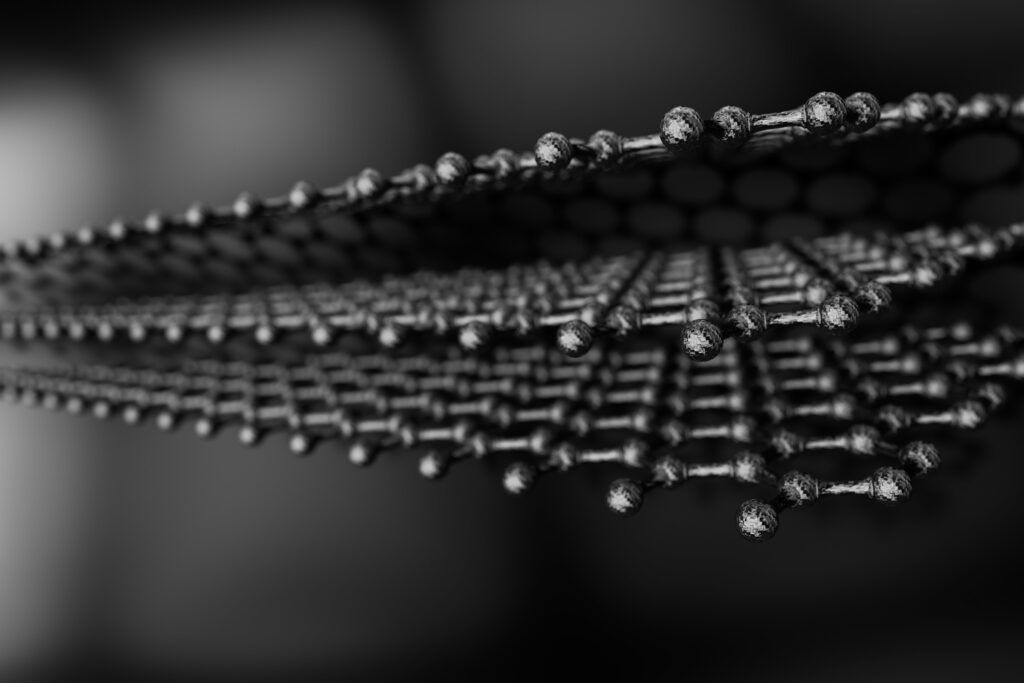
Graphene is a single-atom-thick sheet of carbon arranged in a honeycomb lattice. The structure looks simple, but the performance is astonishing. If nature were ever accused of showing off, graphene would be Exhibit A. Its symmetry is so clean that electrons behave as if the material barely exists, zipping around almost as freely as photons in open space.
Graphene stands out because it:
- Conducts electricity better than copper
- Transfers heat extremely quickly
- Offers tremendous mechanical strength
- Bends without cracking
- Supports high speed electronic performance
- Maintains stability under extreme conditions
Scientists often describe graphene with a kind of quiet awe. It is not every day that a material challenges our assumptions about what is possible in conductivity, strength, and flexibility at the same time.
1.2 Understanding Graphene Oxide
Graphene oxide begins life as graphene, but it becomes something different when oxygen groups attach themselves to the carbon sheet. These added oxygen groups break up the perfect electron pathways, but they also grant new talents. Graphene oxide becomes water friendly. It mixes into polymers. It blends into paints and concrete. It becomes the coworker who shows up early and gets along with everyone.
Graphene oxide:
- Disperses in water and liquids with ease
- Integrates with polymers, resins, and coatings
- Can be produced at commercial scale at a reasonable cost
- Offers strong chemical bonding and adhesion
- Supports filtration and membrane applications
- Provides reinforcement in industrial materials
Graphene oxide is not elegant in the same way graphene is, but it is wonderfully cooperative. Researchers appreciate materials that do not demand perfection from the rest of the world.
2. Key Differences Between Graphene And Graphene Oxide
Even though they share the same carbon backbone, the differences between the two materials are easy to spot once oxygen enters the picture. These differences are not merely cosmetic. They shape how each material performs in scientific, commercial, and industrial environments.
Key differences include:
- Graphene conducts electricity extremely well
- Graphene oxide is more of an insulator unless chemically reduced
- Graphene resists mixing with water
- Graphene oxide dissolves and disperses easily
- Graphene has a flawless hexagonal lattice
- Graphene oxide has disrupted bonding due to oxygen groups
- Graphene fits into electronics and high speed systems
- Graphene oxide suits coatings, composites, and membranes
- Graphene is powerful but expensive to scale
- Graphene oxide offers practicality and compatibility
Each difference creates a distinct role, like two talented cousins who choose different careers.
3. Why These Differences Matter
The contrast between the two materials shapes the future of several major industries. Every application tends to lean toward one material or the other based on the environment, cost, and performance requirements.
Graphene is ideal for:
- High frequency electronics
- Thermal management systems
- Conductive materials and inks
- Advanced aerospace components
- Battery and supercapacitor electrodes
Graphene oxide works best in:
- Water purification membranes
- Protective and anti corrosion coatings
- Polymer strengthening for manufacturing
- Cement reinforcement and construction materials
- Biomedical research and drug delivery systems
One material drives performance at the highest levels. The other blends smoothly into the fabric of everyday industry, improving products without demanding headlines.
4.Benefits
4.1 Benefits Of Graphene
Graphene’s benefits reach across physics, chemistry, and engineering. It behaves like a material that wandered out of a futuristic lab before anyone had a chance to write the blueprint.
Major benefits include:
- Remarkable tensile strength
- Extremely high electron mobility
- Rapid heat conduction
- Resistance to chemical wear
- Lightweight and flexible form factor
- Ability to support next generation energy systems
Graphene is the kind of material that inspires entire fields of research. The biggest challenge is learning how to make enough of it economically.
4.2 Benefits Of Graphene Oxide
Graphene oxide may not have the glamour of graphene, but it excels in areas that industry values. Its water dispersion, cost effectiveness, and adaptability make it a practical powerhouse.
Graphene oxide benefits include:
- Easy mixing into water and solvents
- Large scale, cost friendly production
- Strong adhesion in coatings and paints
- Useful chemical reactivity for functional materials
- Reinforcement for plastics, resins, and cement
- Integration with membranes for filtration
- Structural enhancement for composite materials
Its versatility enables industries to upgrade existing products without massive redesigns.
5. How They Are Made
Producing graphene typically involves high-precision techniques. Each method offers a different balance of cost, quality, and scalability.
Graphene production techniques include:
- Chemical vapour deposition for high-quality sheets
- Liquid phase exfoliation using ultrasonic separation
- Mechanical exfoliation using physical peeling methods
- Plasma-assisted processes in specialized environments
- Reduction of graphene oxide for mid-grade conductive materials
Graphene oxide, by contrast, comes from a more straightforward chemical oxidation of graphite. This makes it easier to scale up and integrate into manufacturing lines.
6. Use Cases For Each Carbon Cousin
Different industries reach for graphene or graphene oxide based on the required mix of performance and practicality. No single material solves every problem, but both solve plenty.
Graphene is used for:
- Flexible electronic displays
- High-speed transistor prototypes
- Thermal spreader interfaces
- Energy storage devices
- Aerospace and automotive composites
- High-performance sensors
Graphene oxide is used for:
- Water treatment and desalination membranes
- Stronger and more durable paints
- Corrosion-resistant coatings
- Improved cement for construction
- Polymer reinforcement
- Catalysis and chemical separation processes
- Fire-resistant composite materials
Rather than competing, they occupy separate niches that often complement each other.
7. Choosing The Right Material
The question is not which material is better. The real question is which material fits the job.
Engineers typically choose:
- Graphene for conductivity, strength, and speed
- Graphene oxide for adhesion, dispersion, and chemical flexibility
- Reduced graphene oxide for middle ground applications
Each decision depends on performance requirements, cost, and processing capacity.
8. Market Trends In 2026
The global graphene materials market continues its upward climb. The pace is steady rather than explosive, but the opportunities grow each year as industries adapt.
Current trends include:
- Automotive manufacturers exploring graphene-reinforced plastics
- Battery developers are testing graphene-based electrodes for faster charging
- Water filtration companies are expanding graphene oxide membrane production
- Construction suppliers adding graphene oxide blends to concrete mixes
- Aerospace firms exploring lighter graphene composites for fuel savings
The market benefits from steady research, rising demand, and increasing manufacturing capability.
9. Challenges And Considerations
Even revolutionary materials face barriers before widespread adoption. The issues are not deal breakers, but they shape how quickly the market evolves.
Challenges include:
- High-quality graphene production remains expensive
- Maintaining uniformity across large batches is difficult
- Existing factories require new equipment and processes
- Environmental and health studies are ongoing
- Regulations differ across countries
- Supply chains need years to stabilize
- Some applications still lack cost-effective scaling methods
Fortunately, scientific progress has a habit of smoothing these concerns over time.
10. Final Thoughts
Graphene and graphene oxide are two extraordinary expressions of what carbon can become when arranged in the right patterns. One pushes the boundaries of speed, strength, and conductivity. The other blends into the industrial world with an easygoing charm that helps transform coatings, composites, and water technologies.
Both matter. Both shape the future. And both deserve attention as they continue to influence everything from clean water to electric cars to the materials used to build the next generation of cities.
Want to see how graphene is powering the next generation of supercapacitors and revolutionizing medicine? Dive into our other posts for a closer look.