
Table of Contents
In the quiet world of materials science, some discoveries quietly transform how we store and use energy. Graphene supercapacitors are one of these transformative technologies. Imagine storing electricity not in slow chemical reactions but in atomic-scale clouds of charge, ready to release instantly. That is the promise of graphene supercapacitors.
This year, researchers and engineers are showing that graphene is not just a laboratory curiosity. With its extraordinary properties, it is helping build energy storage devices that charge fast, last long, and endure conditions that would challenge conventional batteries.
1. How Graphene Exists
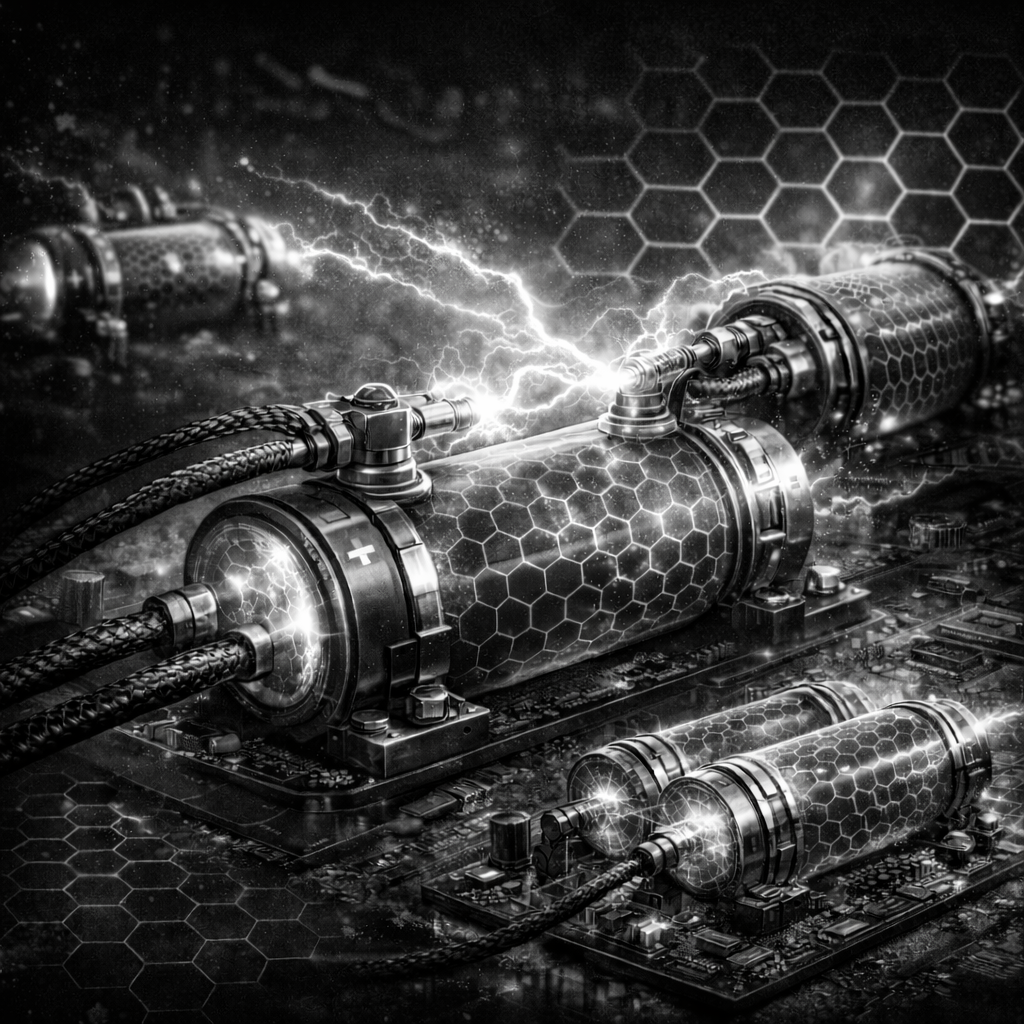
Graphene is a single layer of carbon atoms arranged in a perfect hexagonal honeycomb. It is the thinnest material known while being among the strongest and most conductive. Its surface area is vast, with a single gram theoretically covering over two thousand square meters. This enormous surface area is crucial for storing electric charge.
Graphene combines multiple properties that make it exceptional for energy applications. It is strong yet flexible, lightweight yet durable, chemically stable yet highly conductive. This rare combination allows engineers to rethink how energy can be stored and delivered.
For a deeper look at graphene fundamentals, see our pillar page What Is Graphene.
2. Graphene Supercapacitors
Supercapacitors already fill a niche between conventional capacitors and batteries. They can charge and discharge rapidly, tolerate tens of thousands of cycles, and handle extreme temperatures. Graphene enhances these devices, pushing their performance to new levels.
The advantages of graphene in supercapacitors include:
- Massive charge capacity: More surface area means more storage potential for ions.
- Rapid energy delivery: Exceptional electrical conductivity allows almost instantaneous discharge.
- Durability: Graphene electrodes endure repeated cycles without degradation.
- Flexibility: Can be incorporated into bendable or wearable devices.
- Thermal stability: Maintains performance across a wide temperature range.
- Chemical resistance: Withstands harsh environments without losing functionality.
Graphene supercapacitors are faster, more resilient, and more versatile than conventional energy storage solutions.
3. How Supercapacitors Work With Graphene
Supercapacitors store charge electrostatically rather than chemically. This method allows fast energy exchange and virtually eliminates chemical degradation. The electrodes are coated with graphene, creating a large surface area for ions to attach and detach quickly.
Key parameters that engineers consider include:
- Capacitance: The total charge stored per unit voltage, often dramatically increased with graphene electrodes.
- Energy density: How much energy can be stored per kilogram, higher than traditional capacitors.
- Power density: How quickly energy can be delivered, a hallmark of graphene supercapacitors.
- Cycle life: Tens of thousands of charge-discharge cycles with minimal performance loss.
- Operating temperature: Maintains stability in cold winters or scorching heat without performance loss.
The combination of these factors makes graphene supercapacitors attractive for both industrial and consumer applications.
4. Real-World Applications
Graphene-enhanced supercapacitors are already influencing several industries:
(1). Automotive and Transportation
- Rapid energy bursts for electric vehicles during acceleration.
- Regenerative braking systems store energy quickly for reuse.
- Reduced battery stress, extending lifespan and reducing thermal management needs.
(2). Renewable Energy and Grid Applications
- Smooths fluctuations from solar and wind power.
- Provides instant backup during demand spikes.
- Enables smaller and more efficient energy storage solutions.
(3). Consumer Electronics
- Flexible graphene supercapacitors allow bendable phones and wearable devices.
- Faster charging and longer device lifetimes.
- Reduced heat generation for safer, more reliable electronics.
(4). Industrial and Aerospace
- Backup power systems that charge in minutes.
- Stable energy delivery in extreme environments.
- Lightweight, flexible systems suitable for drones, satellites, and remote installations.
For a more detailed look at graphene applications in real engineering, see our article How Graphene Solved Six Real Engineering Problems This Year.
5. Challenges And Considerations
- Cost: High-quality graphene remains more expensive than traditional electrode materials.
- Manufacturing consistency: Flake size, layer number, and purity affect performance.
- Integration: Adapting existing production lines to graphene-enhanced devices can require significant engineering.
- Material handling: Nanomaterials require careful handling to avoid health and environmental risks.
Despite these challenges, continued research and development are steadily overcoming barriers, making commercial adoption more feasible.
6. The Big Picture
Graphene supercapacitors represent a significant leap forward in energy storage. They combine speed, capacity, durability, and flexibility in ways that batteries and conventional capacitors cannot. The potential impact reaches far beyond any single industry and hints at a future where energy storage is agile, durable, and universally reliable.
Curious how graphene is solving six major engineering challenges, the differences between graphene and graphene oxide, or breakthroughs in bone repair? Check out our other posts to explore these fascinating topics.